Tuesday, May 11, 2021

Kubernetes Versus Docker — DevOps Using Kubernetes & Docker

Credits: https://www.optisolbusiness.com/insight/kubernetes-versus-docker

 Kubernetes versus Docker — A topic that has been discussed numerous times in the cloud industry. Irrespective of your technical or non-technical background, this article will help you understand the key differences and help you with your business decision if you were to make one.

To put things in perspective, “Kubernetes or Docker?” — it is like comparing apples to oranges. Both can function without each other, however, can benefit greatly from each other.

Both Kubernetes and Docker are essential tools for a developer. We can also build DevOps Using Jenkins, Docker, and Kubernetes. Both Kubernetes and Docker help developers package applications into containers to run them in different environments.

Kubernetes is an open-source container-orchestration system for automating computer application deployment, scaling, and management.

It aims to provide a “platform for automating deployment, scaling, and operations of application containers across clusters of hosts”.

It works with a range of container tools and runs containers in a cluster, often with images built using Docker. Kubernetes originally interfaced with the Docker runtime through a “Dockershim”.

Many cloud services offer a Kubernetes-based platform or infrastructure as a service (PaaS or IaaS) on which Kubernetes can be deployed as a platform-providing service.

Docker is a set of platforms as a service (PaaS) product that use OS-level virtualization to deliver software in packages called containers.

Containers are isolated from one another and bundle their own software, libraries, and configuration files; they can communicate with each other through well-defined channels.

Docker can package an application and its dependencies in a virtual container that can run on any Linux, Windows, or macOS computer.

This enables the application to run in a variety of locations, such as on-premises, in a public cloud, and/or in a private cloud.

Docker implements a high-level API to provide lightweight containers that run processes in isolation.

According to Grand View Research, the global application container market size was valued at USD 1.5 billion in 2018 and is expected to register a CAGR of 26.5% from 2019 to 2025.

Thursday, May 6, 2021

BEST MACHINE LEARNING MODEL DEPLOYMENT IN AWS

 Credits : https://www.optisolbusiness.com/insight/on-demand-machine-learning-model-deployment-in-aws

An ergonomic assessment also called an ergonomic risk assessment, is an objective measure of the risk factors in your work environment that may lead to musculoskeletal disorders or injuries among your workforce, so that you can make measurable improvements in the work environment. This article describes how to use AWS Fargate serverless deployment platform to host and execute a Machine Learning computer vision model based on Google’s Media Pipe platform. The objective is to calculate human body angles from the pose points and assess their posture ergonomically to see if there is any strain on the body. We have used industry-standard RULA (Rapid Upper Limb Assessment) assessment sheet to generate the risk score for the user’s posture.

AWS FARGATE

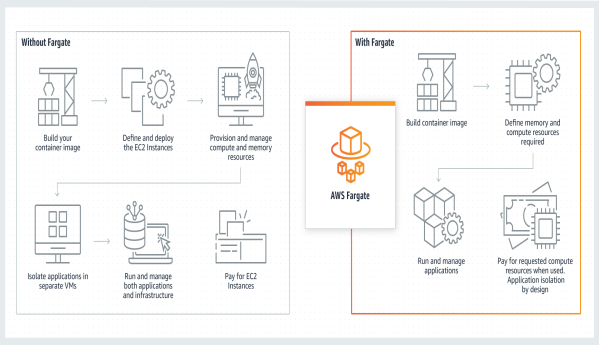
  • AWS Fargate is a serverless compute engine for containers that work with both Amazon Elastic Container Service (ECS) and Amazon Elastic Kubernetes Service (EKS).

MEDIAPIPE POSE

Media Pipe Pose is a Machine Learning model for high-fidelity body pose tracking. It infers 33 two-dimensional landmarks on the whole body (or 25 upper-body landmarks) from RGB video frames utilizing BlazePose research.

OBJECTIVE

  • The objective of the Media Pipe pose estimation project is to detect the pose points of a given image and to calculate the heights of the elbow, knee, hip, etc.

RULA (Rapid Upper Limb Assessment)

RULA was developed to evaluate the exposure of individual workers to ergonomic risk factors associated with upper extremity MSD. The RULA ergonomic assessment tool considers biomechanical and postural load requirements of job tasks/demands on the neck, trunk, and upper extremities. A single-page worksheet is used to evaluate required body posture, force, and repetition. Based on the evaluations, scores are entered for each body region in section A for the arm and wrist, and section B for the neck and trunk. After the data for each region is collected and scored, tables on the form are then used to compile the risk factor variables, generating a single score that represents the level of MSD risk.

The following are the steps for RULA Assessment

Step 1: Locate Upper Arm Position

Step 2: Locate Lower Arm Position

Step 3: Locate Wrist Position

Step 4: Locate Wrist Twist

Step 5: Look up Posture Score in TABLE A

Step 6: Add Muscle Use Score

Step 7: Add Force/Load Score

Step 8: Find Row in Table C

Step 9: Locate Neck Position

Step 10: Locate Trunk Position

Step 11: Locate Legs

Step 12: Look up Posture Score in TABLE B

Step 13: Add Muscle Use Score

Step 14: Add Force/Load Score

Step 15: Find Columns in Table C

OVERVIEW OF PROJECT

ANGLE MEASUREMENT

  • The pose points are fetched and stored in a list according to the profile (full front, right, left)

CONCLUSION

Thus, this article demonstrates the Efficient, on-demand, scalable, and cost-effective method of deploying the Google MediaPipe model in AWS Fargate’s serverless cloud.

Tuesday, December 8, 2020

Injury Prevention using Pose Estimation in Android Phone - Computer Vision Analysis


For Free Consultation (or) To Avail Offers visit https://bit.ly/3jf8nF0
This video is a demo of using Pose Estimation to assess for risk of injury using RULA protocol (https://ergo-plus.com/rula-assessment-tool-guide/) .
The model is optimized to run inference on an edge device, an Android phone in this case.

Thursday, October 22, 2020

How Text Analytics Impacts In Healthcare Industry?

 For Free Consultation 

Here are the ways that text analytics impact in health care industry:

Text analytics is the process that analyses unstructured text, extract relevant information, and transform it into structured information that can be leveraged in numerous ways. Unstructured data is ubiquitous in blogs, tweets, call centers, online news, etc, and companies are rapidly adopting the text analytics technology to gain an insight into this information and gain a competitive advantage.

According to marketsandmarkets, the text analytics market projected to grow from $3.2 billion in 2016 To $8.8 billion by 2022, at a Compound Annual Growth Rate (CAGR) of 17.2% during the forecast period. The major growth drivers of the market include the growing need for social media analytics and the increasing need for predictive analytics for businesses.

Text analytics provides a more tactical approach through actionable insights from analyzed data. Further, the technology is expected to gain ground over the next few years owing to its ability to predict and forecast consumer behavior. The technology is used across an array of applications including brand-reputation management, market research, competitive intelligence, and customer service & support.

Text Analytics Market

The text analytics has become helpful in the healthcare sector during the coronavirus pandemic to explore the information about the coronavirus. Text analytics is software that helps to create proper text data from unstructured text from trends, uncover insights, and patterns.

Text Analytics - Global Market

The healthcare and life sciences segment is the fastest-growing segment in the text analytics market due to the growing demand to tackle big data and deliver valuable insights from it.

Global Text Analytics Market

The healthcare industry is overwhelmed with data. Much of this healthcare data is in the form of unstructured text, such as doctor’s notes, medical publications, electronic health records, clinical trial protocols, medical encounter transcripts, and more. Healthcare organizations, providers, researchers, pharmaceutical companies, and others face an incredible challenge in trying to identify and draw insights from all that information. Unlocking insights from this data has massive potential for improving healthcare services and patient outcomes.

With Text Analytics for health, users can detect words and phrases mentioned in the unstructured text as entities that can be associated with semantic types in the healthcare and biomedical domain, such as diagnosis, medication name, symptom/sign, examinations, treatments, dosage, and route of administration.

Here are the 4 ways Text Analytics Impact the Healthcare Industry

  • Treatment effectiveness
  • Patient profile analytics
  • Healthcare management
  • Prevent Fraud and abuse


4 ways Text Analytics Impact the Healthcare Industry

1.Treatment Effectiveness

The effectiveness of medical treatment is evaluated by implementing Text analytics. Text Analytics compares the causes, symptoms, and courses of treatments. A report on courses of action is generated. This report displays the effectiveness and associates the various side-effects of treatment. It also helps to determine proactive steps that can reduce the risk of affliction.

2.Patient Profile Analytics

Patient profile analytics is used to identify individuals who would benefit from proactive care or lifestyle changes. Using text analytics, we can extract patient’s data from various sources and store the information in a patient profile graph. The patient profile graph provides a holistic view of the patient’s information. With Text Analytics, patient populations by demographic characteristics can be determined. By doing so, we can identify groups using the most resources, reduce expenditures through better disease management and text-based decision support assistance can be used at clinical call centers for complex patient scenarios.

3.Healthcare Management

Text analytics is used to better identify and track chronic disease states and high-risk patients, design appropriate interventions, and reduce the number of hospital admissions and claims. Text Analytics can be used to view readmission data and resource utilization and compares its data with the current scientific literature to develop better diagnosis and treatment protocols.

4.Prevent Fraud and Abuse

Fraud and abuse are detected after an analysis of text data to establish norms and then identify unusual or abnormal patterns of claims by physicians, laboratories, clinics, or others. Among other things, the data analysis highlights inappropriate prescriptions or referrals and fraudulent insurance and medical claims.

Friday, September 11, 2020

Real Time Person Detection using Rasberry Pi


Are you looking to build a person tracking/detection on the edge with Raspberry Pi? This demo of Real-Time Person Tracking on the Edge with a Raspberry Pi will help you understand the way it works and various use cases this can be implemented.

For free consultation or to avail offers visit us on https://bit.ly/3jf8nF0
We are here to help you😀😀

Wednesday, September 9, 2020

PPE (Personal Protective Equipment) detector for Object detection


For Industrial Worker's Safety
Personal Protective Equipment (PPE) is the equipment that protects the user against health or safety risks. This video demonstrates Real-time video analysis with advanced algorithms and machine learning to ensure employees are wearing the correct PPE for their working environment.
To get free consultation or to avail offers for you visit us on https://bit.ly/3jf8nF0
We are here to help you😀😀.`
#Workerssafety #Objectdetector #Sitesafety #Europe #India #UK #AI #ML #Helmetdetection #Violationdetection #Industrialsafety #US #PPEdetectionsoftware #Workersmonitoring

Sunday, August 30, 2020

How AI can be used effectively in health care industry and what ways it helps the industry?


Summary


With Covid-19 pandemic raging all around the world causing harm to public health and livelihoods, this is a good time to strategize how AIcan be used effectively to help the health care industry to fight this pandemic in particular and overall preparedness in general. The 3 main areas that we believe AI can help are,
·         Automated monitoring of mask and other Personal Protective Equipment (PPE) compliance to prevent the spread of infections.
·         Data aggregation and building predictive models to identify potential hot spots for the spread of infection.
·         Building AI based tools to act as a physician’s aid in diagnosis and treatment of Covid-19 positive patients.
Each of these three use-cases are described in detail below

1.    Automated monitoring of mask and other Personal Protective Equipment (PPE)


Computer-vision based AI models can be trained to detect if humans are wearing PPE like masks and if health care workers are wearing PPE suits, gloves, face-shield etc., Experts all over the world concur that wearing face masks is a simple yet important way to prevent spread of infection. However, monitoring the PPE usage among general population is a vexing problem. Lack of monitoring will lead to lack of PPE compliance and will risk an emergence of the disease spread that the world has worked hard to contain so far. Optisol Datalabs team are experts in building such AI models for PPE monitoring and compliance in industrial space even before this pandemic took over the world. In fact, we are one of the only AI service providers who have successfully implemented PPE compliance monitoring and tracking in industries to improve health and safety. We are re-training such models currently to detect health-care related PPE like masks, gloves, safety suits and face shields.
The model we train are optimized to run in edge devices like cellphone enabling rapid deployment of such models without investing in expensive hardware. Such cellphone turned AI devices can be programmed to send safety violations to the concerned authorities to quickly take preventive actions. The detailed process flow on how to train and deploy such AI models is described in the diagram below. A demo of our Computer Vision based AI model trained to detect mask, safety suit, face shield and gloves is published at this link in our youtube channel


2.    Predictive models to identify potential infection hot spots


Daily data on current Covid-19 positive cases are published in various news outlets. It is possible to collate all these data and build a model that can predict the likely hotspot of the infection to warn the residents in those areas to exercise caution. Google and Apple are about to publish updates to their platforms that allows monitoring of the movement of the smart phone users in a way that does not violate the privacy of the users. This will allow more granular collection of real-time data to build such predictive models with increased accuracy and granularity. Such models are effective tools for public health organizations and individuals to get access to accurate data and to prescribe the least intrusive policies that allows resumption of economic activity at the same time reduce the risk of infection spread. We have extensive experience in building such time-based predictive models. We are currently working on build a model from the publicly available data right now.

Text Analytics Company In USA,hire machine learning engineers,computer vision analytics,action detection for analytics
Computer Vision Analytics

3.    Models to act as physician’s aid in diagnosis and treatment


Another important use of AI in health care industry is to build models that act as physician’s aid in disease diagnosis and treatment. There was a famous experiment conducted in the US where the AI can predict heart attack and stroke better than trained physicians (https://time.com/5784090/ai-heart-attack-stroke/). AI models can operate on large number of parameters that even trained physicians cannot always reliably compute to make their decisions. In such situations, AI becomes a valuable tool at the physician’s disposal for to increase accuracy of the diagnosis and effectiveness of the care. There has been lot of interest in just using chest x-rays to predict Covid-19 and there are a lot of service providers who claims to build an accurate diagnosis tool to detect Covid-19 from a chest x-ray. Such claims are not scientifically validated, hence cannot be relied up as effective diagnostic tools. Such hype in fact causes skepticism in using AI in health care amongst health care providers. This is quite unfortunate. Because AI is proven to be an effected diagnostic aid if used correctly. Chest x-rays are but one data point in the diagnosis of the disease. There are other effective data points like travel history, place of residency, potential contacts (neighbors, family members, colleagues) with a positive diagnosis, other symptoms being experienced like fever, cough etc., staying in a nuclear family with mixed age group members, past health history of pulmonary diseases etc., When all these data points are combined and fed to a AI model, we will greatly increase the predictive accuracy of the tool. In fact, these data can be collected from the patient at their homes and they do not even have to visit a hospital and potentially risk spreading the infection.

Summary


These 3 use cases span infection control, monitoring the spread of infection for effective public policies and diagnosis and treatment of the disease. In our opinion, AI is somewhat under-utilized in how it can be effectively used to help mankind traverse the current pandemic successfully with the minimum loss of life and property. We are in the fore front of developing and deploying these AI models.